What project owners need to know.
Silicon wafers are taxed at 5% GST in India: Notification No. 9/2025-Integrated Tax (Rate), in force from 22 September 2025, lists "3818 Silicon wafers" in its 5% schedule. Photovoltaic cells, whether or not assembled in modules, are also at 5% under the notification's renewable-energy devices entry. Silicon ingots are not named in the 5% schedule; if classified as silicon under heading 2804, they would fall under the 18% residual entry for inorganic chemicals. Pages quoting 12% describe the rate before September 2025. This guide is general industry information drawn from published sources. It is not legal, tax or engineering advice, and any figure should be validated against current official documents and the specific project. Last verified against the notification text on 3 November 2026.
What changed in September 2025
The GST Council cut the rate on renewable-energy devices and their parts from 12% to 5%, with effect from 22 September 2025, PV Tech reported on 4 September 2025. The change was given legal effect by Notification No. 9/2025-Integrated Tax (Rate), dated 17 September 2025 and corrected on 18 September 2025, with a matching Central Tax (Rate) notification for CGST and SGST.
The IGST notification sorts goods into schedules: Schedule I at 5%, Schedule II at 18%, and smaller schedules for other rates. For the silicon chain, the useful question is simply which schedule names your product.
- Schedule I: 5% IGST (2.5% CGST + 2.5% SGST)
- Schedule II: 18% IGST
- In force from 22 September 2025
Silicon wafers: heading 3818 is split
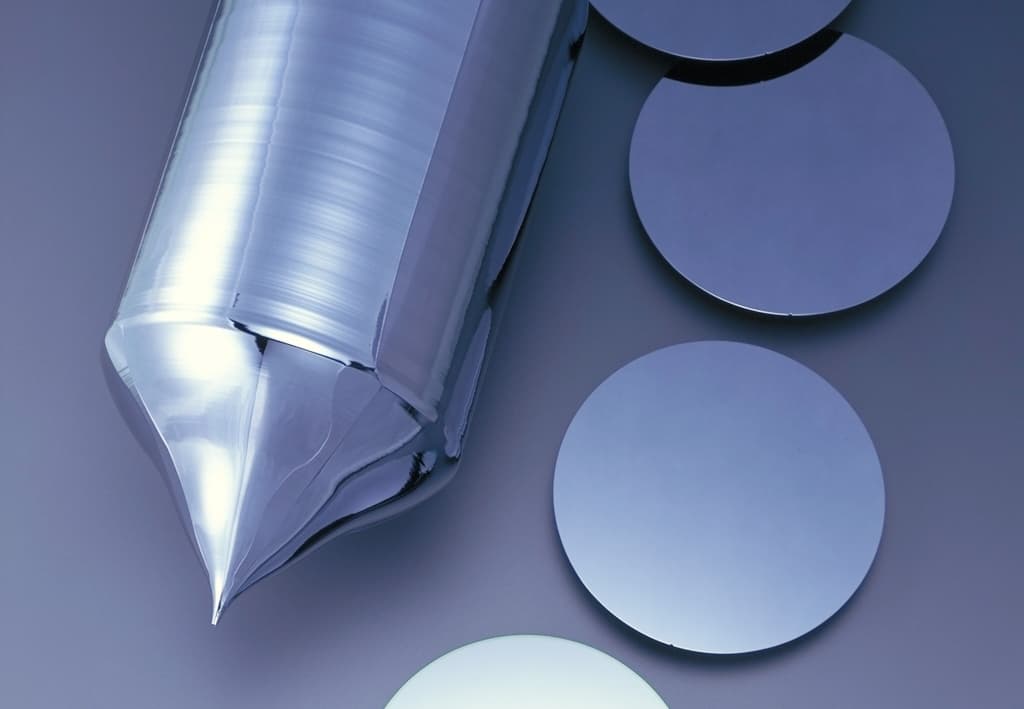
Heading 3818 covers chemical elements doped for use in electronics, in the form of discs, wafers or similar forms. The notification splits it. Schedule I, serial number 262, lists "3818 Silicon wafers" at 5%. Schedule II, serial number 105, keeps the rest of the heading at 18%, with the words "other than silicon wafers".
Read plainly, a doped silicon wafer classified under 3818 is at 5%. The notification does not limit that entry to solar use. Whether a particular product is a silicon wafer of heading 3818 is a classification question, which our ingot and wafer HS code guide covers.
Solar cells and modules
Schedule I, serial number 437, covers renewable-energy devices and parts for their manufacture under chapters 84, 85 or 94. Its list includes solar power-based devices, solar power generators and "photo voltaic cells, whether or not assembled in modules or made up into panels". That places solar cells and modules at 5%.
The entry matters because heading 8541 as a whole, semiconductor devices, sits in Schedule II at 18% (serial number 513). The entry also carries an explanation about goods supplied together with other goods or services, which affects EPC contracts; that is outside the scope of this guide.
Silicon ingots: not in the 5% list
We found no Schedule I entry that names silicon ingots. Ingots are usually classified as silicon under heading 2804, though some doped forms are argued under 3818. If an ingot is classified under chapter 28, it falls under Schedule II, serial number 35, "all inorganic chemicals" not specified elsewhere, at 18%.
That creates a gap inside the chain: an ingot invoiced at 18% becomes a wafer sold at 5%. Producers and buyers should settle the classification first and read the rate from it, not the other way round.
Why older pages still show 12% or 18%
Search results still carry pages written before 22 September 2025, when renewable-energy devices were taxed at 12%. Some articles also mix up the 18% Schedule II rate for 8541 semiconductor devices with the 5% renewable-energy entry for photovoltaic cells.
When two sources disagree, the notification and its date settle it. Rates can change again with any GST Council decision, so check the latest notification on the date of supply.
GST, customs duty and input tax credit
GST and customs duty are separate taxes. On imports, IGST is charged on top of basic customs duty; our import duty guide covers the customs side. A domestic wafer or cell maker usually claims input tax credit on GST paid on its inputs.
Where inputs carry a higher GST rate than the output, credit can build up. This is often called an inverted duty structure, and the CGST Act provides a refund route for it, subject to conditions. Whether it applies to a given plant depends on its inputs and outputs, so this is one for the company's tax advisers.
What to check on an invoice
A clear invoice avoids disputes later, for the seller and for the buyer claiming credit.
- Eight-digit HSN code and a precise description (for example, monocrystalline silicon wafer, M10, n-type)
- GST rate and the schedule entry it comes from
- Whether the goods are a wafer, an ingot or a cell, since the rates differ
- Supplier GSTIN and place of supply
- For imports: the bill of entry showing basic customs duty and IGST separately
How JRST supports this requirement
JRST Technology works on the silicon chain from high-purity quartz to ingots and wafers, and helps buyers write clear technical descriptions of what they are buying, which is where classification starts. Buyers looking for wafers, cells or spares can send an enquiry through the JRST Buyer Portal. Tax positions remain with the buyer and its advisers.
Solar Wafers: products and enquiriesSolar Cells: products and enquiriesDiscuss your requirement
Mohammed Saif Zaveri connects JRST's industrial content to execution conversations.
As Co-Founder and designated partner of JRST Technology LLP, Mohammed Saif Zaveri works across industrial growth, strategic partnerships, client conversations, equipment strategy, and project pathways for silicon, solar, semiconductor, and advanced-manufacturing opportunities.
This knowledge page is part of JRST's public industrial knowledge base, designed to help buyers move from search terms and early research toward a structured technical-commercial discussion.
View Mohammed Saif Zaveri's profileConnect on LinkedInFrequently asked questions
What is the GST rate on solar wafers in India?
5%. Notification No. 9/2025-Integrated Tax (Rate) lists "3818 Silicon wafers" in its 5% schedule, effective 22 September 2025. Older pages showing 12% or 18% predate the change or refer to other entries. Last verified 3 November 2026 against the notification text; confirm the current notification before invoicing. Not tax advice.
Is GST on silicon ingots the same as on wafers?
Not necessarily. Silicon ingots are not named in the 5% schedule. If classified as silicon under heading 2804, they fall under the 18% residual entry for inorganic chemicals. Classification decides the rate.
What is the GST rate on solar cells?
5%. Photovoltaic cells, whether or not assembled in modules or made up into panels, are listed under the renewable-energy devices entry in Schedule I of Notification 9/2025-IT(Rate).
Which HSN code applies to a silicon wafer?
Doped silicon wafers are usually classified under heading 3818. Silicon ingots are usually classified under 2804. See our HS code guide for ingots and wafers for the detail.
Did GST on solar cells change in 2025?
Yes. The rate on renewable-energy devices, including photovoltaic cells and modules, fell from 12% to 5% with effect from 22 September 2025.
Does JRST give tax advice?
No. JRST supplies technical and sourcing support for ingot, wafer and cell projects. GST and classification positions belong to the company and its tax advisers.
Primary sources and further reading
Last reviewed 2026-11-03. Technical scope, policy eligibility, availability, and commercial terms should be independently confirmed for each project.