
What project owners need to know.
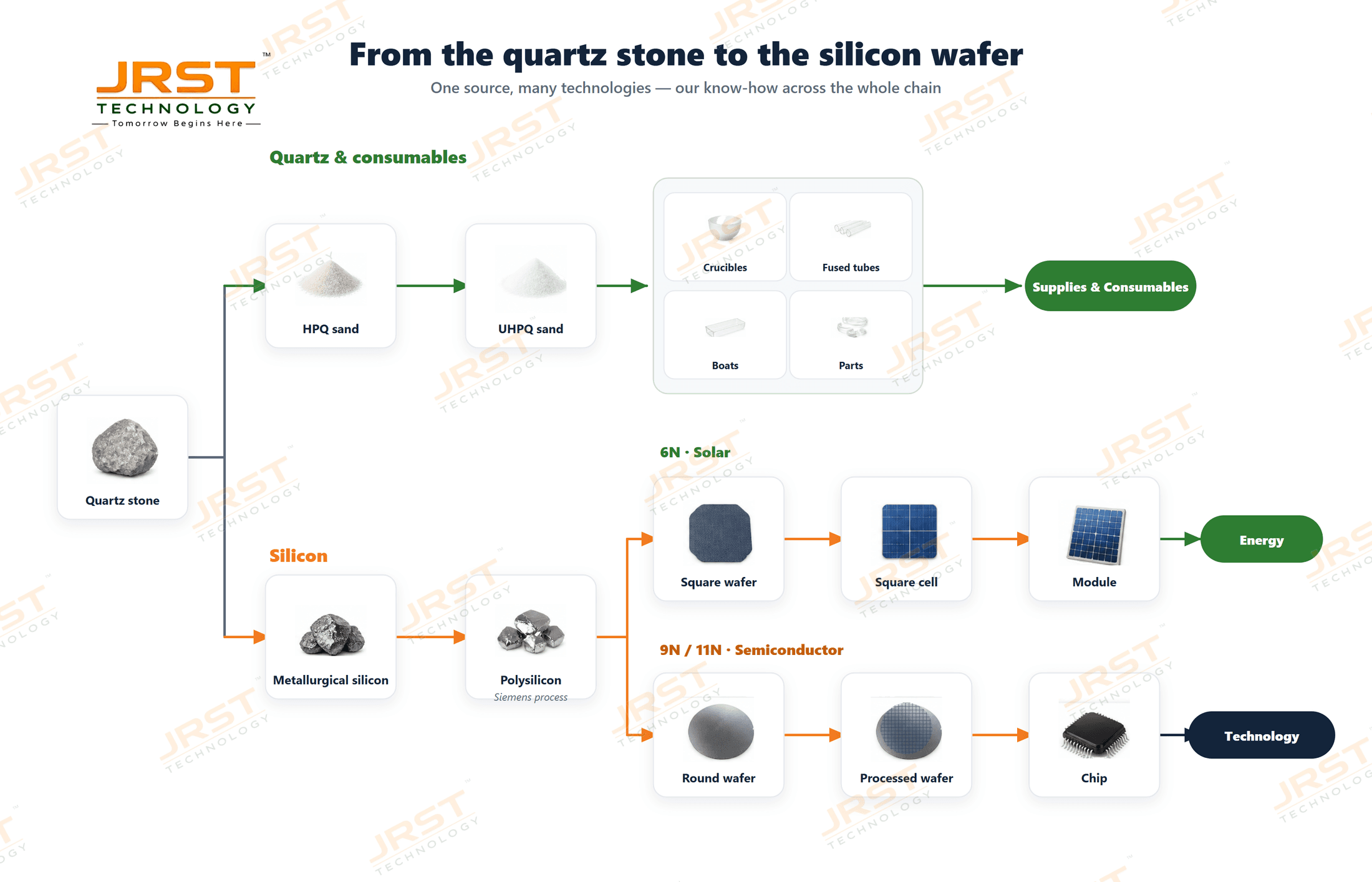
Silicon containing at least 99.99% silicon by weight, the form that polysilicon and silicon ingots usually take, falls under HS subheading 2804.61, Indian tariff item 2804 61 00. Silicon doped for electronics in the form of discs, wafers or similar forms falls under heading 3818, where Indian tariff item 3818 00 10 is described by tariff aggregators as undiffused silicon wafers. The move from 2804 to 3818 marks the step from bulk silicon to a wafer.
Where silicon sits in the tariff
The Harmonized System, which India's Customs Tariff follows to six digits, treats silicon as an inorganic chemical. Heading 2804 covers hydrogen, rare gases and other non-metals, and subheading 2804.61 covers silicon containing by weight not less than 99.99% of silicon. India's eight-digit tariff item for it is 2804 61 00.
Heading 3818 sits in Chapter 38, miscellaneous chemical products. It covers chemical elements doped for use in electronics, in the form of discs, wafers or similar forms, and chemical compounds doped for use in electronics. In India's tariff the heading is split into 3818 00 10, listed by tariff aggregators as undiffused silicon wafers, and 3818 00 90 for others. Confirm the exact wording against the current CBIC tariff before filing.
- 2804 61 00: silicon, ≥99.99% Si by weight
- 3818 00 10: undiffused silicon wafers (as listed by tariff aggregators)
- 3818 00 90: other doped elements and compounds for electronics
Is a silicon ingot 2804 or 3818?
The heading text of 3818 names discs, wafers and similar forms. An ingot is a large cylindrical crystal, not a wafer, and published customs practice tends to keep ingots in 2804.61. In April 2024 US Customs and Border Protection ruled (HQ H336366) that monocrystalline silicon ingots grown by the Czochralski method for solar cells are classified under 2804.61.00.
That ruling is US practice, not an Indian decision, but both countries apply the same six-digit HS text. For a specific product, Indian classification should be confirmed against the CBIC tariff and, where there is real doubt, through an advance ruling.
Why a change of heading matters
In trade rules, a change in tariff heading (CTH) is a common way of showing that a product has been genuinely transformed rather than just repackaged. Many free trade agreements use a CTH or change-in-subheading test, often combined with a value-added threshold, to decide where a product originates. India's CAROTAR 2020 rules require importers claiming preferential duty to know which origin criterion applies.
For the silicon chain, the step from 2804 to 3818 is the step from bulk silicon to a wafer: the point where slicing, etching and cleaning turn a crystal into an electronics-ready product. When JRST's April 2026 release on the Nagpur pilot batch referred to value addition through tariff transformation (CTH 2804 61 00 to 3818 00 10), it was describing this move up the chain, not a change to the tariff schedule itself.
- CTH: product falls under a different four-digit heading from its inputs
- Used in FTA rules of origin, often with a value-added test
- Check the product-specific rule in the relevant FTA annex
Origin can change without a heading change
The same CBP ruling shows the limit of the CTH idea. Polysilicon and a Czochralski ingot share subheading 2804.61, so there is no tariff shift between them, yet CBP held that ingots grown in Malaysia from Chinese polysilicon have Malaysian origin. Under US law it treated crystal growth as substantial transformation.
Different regimes use different tests, so neither result carries over automatically to Indian rules or to an FTA claim.
How this connects to ALMM List-III
Customs classification and ALMM are separate systems. ALMM List-III, effective 1 June 2028 under MNRE's March 2026 amendment, decides which domestic ingot and wafer makers count for covered projects; the tariff code decides how an imported good is described and taxed at the border. A wafer can be correctly classified under 3818 and still not count for ALMM if it was not made by an enlisted manufacturer.
- Tariff code: how a good is classified and taxed on import
- ALMM List-III: whose ingots and wafers count for covered projects
- Both need checking; one does not settle the other
What importers and ingot-wafer makers should confirm
Duty rates and descriptions change with budgets and notifications, and third-party tariff sites do not always agree. Before relying on a code, check the current CBIC Customs Tariff, any exemption notification that applies, and the IGST rate in force on the date of import.
- Purity, doping and physical form of the product
- Current CBIC tariff wording and basic customs duty
- IGST rate and any applicable exemption notification
- FTA origin rule, if claiming preferential duty under CAROTAR
- An advance ruling where classification is disputed
How JRST supports this requirement
JRST grows silicon ingots at Maharashtra's first silicon-ingot line in Nagpur and helps ingot-wafer projects plan the move up the chain from bulk silicon to wafers. This guide is general information on public tariff and trade-rule sources, not customs advice. Tariff wording, duty rates and origin rules change; confirm against the current CBIC tariff and notifications, or with a licensed customs broker, before filing or making a procurement decision.
Discuss your requirement
Mohammed Saif Zaveri connects JRST's industrial content to execution conversations.
As Co-Founder and designated partner of JRST Technology LLP, Mohammed Saif Zaveri works across industrial growth, strategic partnerships, client conversations, equipment strategy, and project pathways for silicon, solar, semiconductor, and advanced-manufacturing opportunities.
This knowledge page is part of JRST's public industrial knowledge base, designed to help buyers move from search terms and early research toward a structured technical-commercial discussion.
View Mohammed Saif Zaveri's profileConnect on LinkedInFrequently asked questions
What is the HS code for silicon ingots in India?
Silicon ingots of at least 99.99% purity are generally classified under HS subheading 2804.61, Indian tariff item 2804 61 00. US CBP classified Czochralski monocrystalline ingots under 2804.61 in an April 2024 ruling. Confirm the current CBIC tariff, or seek an advance ruling, for a specific product.
What is HS code 3818 00 10?
Heading 3818 covers chemical elements doped for use in electronics in the form of discs, wafers or similar forms. Indian tariff aggregators list sub-item 3818 00 10 as undiffused silicon wafers. Check the exact wording in the current CBIC tariff.
Is a solar ingot classified differently from a semiconductor ingot?
Not by end use alone. Classification turns on purity, doping and form. Both solar and semiconductor Cz ingots are usually high-purity silicon in ingot form, which points to 2804.61; wafers cut from them move to heading 3818.
Does the HS code affect ALMM eligibility?
No. ALMM List-III depends on whether ingots and wafers come from an enlisted manufacturer, not on the customs code. The code matters for import duty and origin claims.
What does CTH mean in customs?
Change in tariff heading: a test in many rules of origin under which a product counts as transformed if it falls under a different four-digit HS heading from its non-originating inputs.
Primary sources and further reading
Last reviewed 2026-10-16. Technical scope, policy eligibility, availability, and commercial terms should be independently confirmed for each project.