
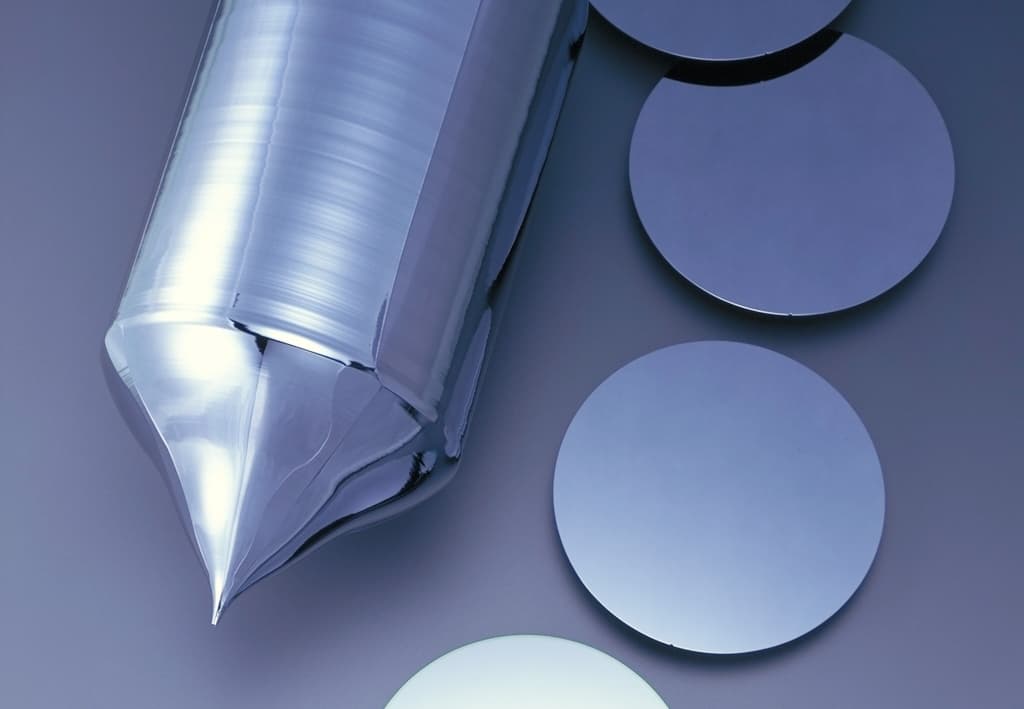
What project owners need to know.
Solar wafer prices are quoted per piece in Chinese yuan. On 30 September 2026 SMM put n-type 183 mm wafers at 0.994 to 1.002 yuan, 210R at 1.026 to 1.044 yuan and 210 mm at 1.119 to 1.145 yuan per piece, after leading makers raised quotes in August. TaiyangNews' CW40 index (8 October 2026) showed 182 mm and 210R up month on month and 210 mm down 2.1%. Prices as of those dates; check the latest weekly quote before relying on them.
Latest quotes (as of October 2026)
The figures below are Chinese domestic market quotes from public sources, listed by date. They are indications of direction, not delivered prices in India or any supplier's offer.
- 12 Aug 2026, SMM: leading wafer makers resumed quotes at 0.9 yuan (183 mm), 1.0 yuan (210R) and 1.2 yuan (210 mm) per piece, 0.1 yuan above the previous level
- 30 Sep 2026, SMM weekly review: 183 mm 0.994-1.002; 210R 1.026-1.044; 210 mm 1.119-1.145 yuan per piece
- 8 Oct 2026, TaiyangNews CW40 (Gessey PV Consulting data): n-type 182 mm and 210R up month on month; 210 mm down 2.1%
How to read a wafer quote
Wafer prices are normally quoted per piece, not per watt, and in yuan for the Chinese market. Format names refer to wafer size: 182 or 183 mm square formats, 210 mm square, and 210R, a rectangular format derived from the 210 mm size. Comparing quotes only makes sense for the same format, thickness and doping type.
Converting a per-piece price to a per-watt figure depends on the cell efficiency and the wafer's area, so a per-watt comparison is a cell-maker's calculation rather than a property of the wafer.
What moves wafer prices
Polysilicon is the largest input, so polysilicon pricing and output policy flow quickly into wafer quotes. SMM linked the August increase to higher procurement costs for wafer makers, matching higher furnace input costs. Utilisation matters too: when ingot and wafer plants run below capacity, quotes come under pressure.
Policy is now a third driver. China's draft export-control catalogue of October 2026 lists processes for wafers 70 micrometres thick or less among proposed prohibited items, which matters more for technology access than for this month's prices.
- Polysilicon cost and output
- Ingot and wafer plant utilisation
- Format and thickness mix
- Trade and industrial policy
What it means for India's ingot-wafer buildout
India is planning a large step-up in wafer capacity: PV Tech reported an 80 GW ingot-wafer target by June 2028, against about 2 GW operating in September 2026 according to Mercom, and ALMM List-III for ingots and wafers takes effect on 1 June 2028. Chinese wafer prices set the reference that Indian wafers will be compared with, even though ALMM and DCR rules mean the two markets will not be priced the same way.
Low international wafer prices are a reason to focus a domestic project on what it can control: yield, consistency, qualification with cell makers and secure upstream supply. We do not publish Indian wafer prices or plant economics in this guide.
How JRST supports this requirement
JRST supports Indian ingot and wafer projects with equipment selection, plant setup, qualification planning and upstream materials from quartz to crucible. This tracker reports public Chinese market quotes as of the dates shown; they are not JRST prices or offers, and they should be validated against current quotes before any commercial decision.
Discuss your requirement
Mohammed Saif Zaveri connects JRST's industrial content to execution conversations.
As Co-Founder and designated partner of JRST Technology LLP, Mohammed Saif Zaveri works across industrial growth, strategic partnerships, client conversations, equipment strategy, and project pathways for silicon, solar, semiconductor, and advanced-manufacturing opportunities.
This knowledge page is part of JRST's public industrial knowledge base, designed to help buyers move from search terms and early research toward a structured technical-commercial discussion.
View Mohammed Saif Zaveri's profileConnect on LinkedInFrequently asked questions
How much does an n-type solar wafer cost?
On 30 September 2026 SMM quoted Chinese n-type wafers at about 0.99 to 1.00 yuan per piece for 183 mm, 1.03 to 1.04 yuan for 210R and 1.12 to 1.15 yuan for 210 mm. Quotes change weekly; check the latest dated source.
Why did wafer prices rise in 2026?
SMM linked the August 2026 increase, about 0.1 yuan per piece, to higher procurement costs for wafer makers, matching higher furnace input costs. TaiyangNews' CW40 index in October still showed 182 mm and 210R up month on month.
Are Indian wafer prices the same as Chinese quotes?
No. Chinese quotes are the international reference, but Indian wafers serve a market shaped by ALMM, DCR and duties, and very little Indian wafer capacity is operating yet. We do not publish Indian wafer prices without a public source.
What is a 210R wafer?
210R is a rectangular wafer format derived from the 210 mm wafer size, used in high-power module designs. Its price sits between the 183 mm and 210 mm square formats in recent SMM quotes.
Primary sources and further reading
Last reviewed 2026-10-25. Technical scope, policy eligibility, availability, and commercial terms should be independently confirmed for each project.