What project owners need to know.
No Indian public-sector undertaking (PSU) is producing polysilicon, and as of 23 November 2026 we found no confirmed PSU polysilicon project under construction. PSU-led upstream solar manufacturing was proposed in 2017 and reported again in 2020 (with NTPC and BHEL named as possible builders), and the one concrete PSU vehicle, Coal India's CIL Solar PV Ltd, set up for a 4 GW ingot-to-module plant, was dissolved in May 2026. Policy attention has since shifted to a production-linked incentive (PLI) scheme for polysilicon, open to private makers, which had not been notified at the time of checking.
Why the PSU question keeps coming back
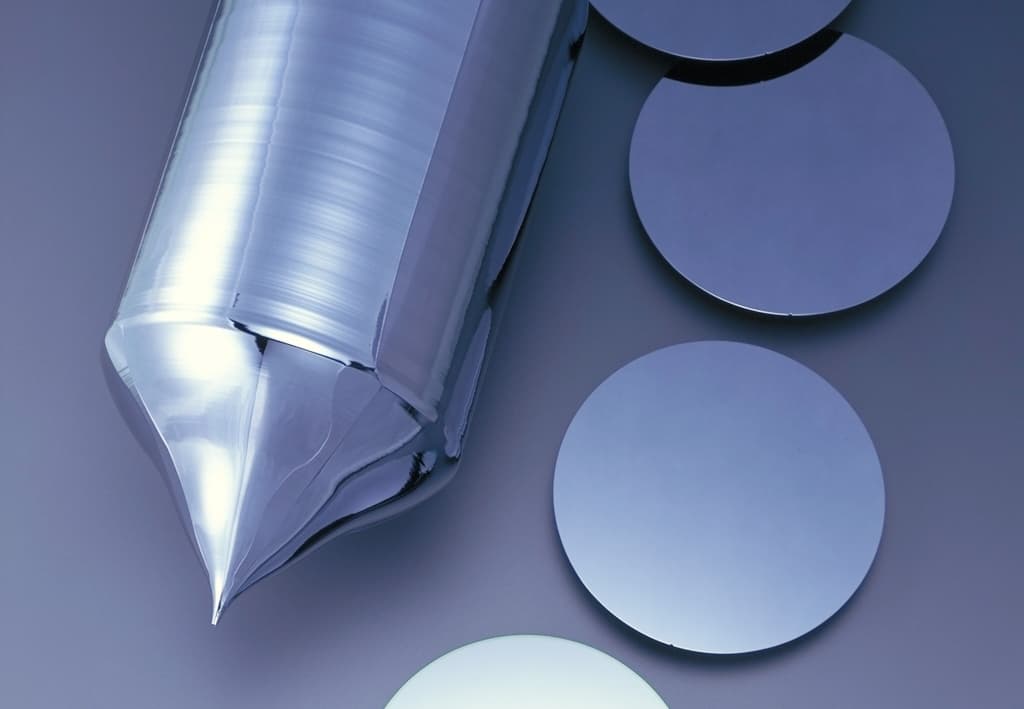
Polysilicon is the first link of the crystalline-silicon chain: it is the ultra-pure feedstock that is melted in quartz crucibles and grown into ingots, which are then sliced into wafers. India has built large module capacity and growing cell capacity, but it has no commercial polysilicon production and only a small base of ingot and wafer plants.
Polysilicon plants are capital-heavy, energy-hungry and slow to reach good yields, and they compete with very large incumbent producers abroad. That is why, at several points over the last decade, policymakers floated the idea that state-owned companies with strong balance sheets should take the first step.
Timeline: what was proposed and reported
Read each item for what it is. A proposal or a press report quoting an official is not a sanctioned project; an exchange filing or a commissioning notice is.
- Dec 2015: MNRE said the government was considering support for polysilicon, ingot and wafer production; India then had no such facilities (PV Tech).
- Dec 2017: MNRE proposed about ₹11,000 crore (US$1.7 billion) of support for local manufacturing, including PSUs setting up integrated polysilicon-to-module lines of 1 GW each and a 3% IREDA interest subvention for capacity built without capital subsidy; comments were invited (PV Tech).
- Oct 2020: Financial Express, as relayed by PV Tech and Electronics For You, reported that PSUs were in talks to set up roughly 10 GW of polysilicon capacity and that companies such as NTPC and BHEL may build plants; an MNRE official also said interest subvention for wafer and ingot makers needed to be looked at.
- Before 2026: Coal India formed CIL Solar PV Ltd, a wholly owned subsidiary, as a vehicle for an integrated 4 GW ingot, wafer, cell and module plant.
- May 2026: the Ministry of Corporate Affairs confirmed the striking off of CIL Solar PV Ltd, and Coal India told the stock exchanges the subsidiary stood dissolved (pv magazine, 12 May 2026; Coal India NSE filing).
- Aug 2026: MNRE Secretary Santosh Sarangi said a PLI scheme for polysilicon, expected to support more than 10 GW, was being worked on, and that no one in India had yet set up polysilicon (Down To Earth).
What is confirmed today
Three things can be stated with confidence as of 23 November 2026. First, no polysilicon is being produced commercially in India; the Secretary's August remarks and Mercom's September report agree on that. Second, the only PSU vehicle that was formally created for upstream solar manufacturing, CIL Solar PV, no longer exists. Third, the polysilicon PLI has been discussed publicly but had not been notified by Cabinet or MNRE when we checked.
We found no 2026 source naming NTPC, BHEL or another PSU as building a polysilicon plant. If that changes, the reliable signal will be a board approval disclosed to the stock exchanges, a PIB release, or a scheme award, not an unattributed media report.
Interest subvention and financing support: reported vs in force
Interest subvention, where the government or a lender such as IREDA pays part of the interest on a project loan, has been floated for upstream solar more than once: as a 3% IREDA proposal in 2017 and as an idea mentioned by an MNRE official in 2020. We did not find it notified as a scheme for ingot or wafer makers.
The financing signals in 2025–26 point elsewhere. Mercom reported in December 2025 that MNRE had asked the Department of Financial Services to advise lenders to be cautious about new standalone module capacity and to support upstream stages such as cells, ingots, wafers and polysilicon. In March 2026 the industry body NSEFI asked MNRE for viability gap funding for about 50 GW of ingot-wafer capacity; that too remained a proposal.
- In force: ALMM List-III, applying to ingots and wafers from 1 June 2028, which creates assured domestic demand
- Discussed, not notified: polysilicon PLI (more than 10 GW)
- Proposed by industry: VGF for ~50 GW of ingot-wafer capacity
- Floated in the past, not found in force: interest subvention for ingot and wafer makers
What it means for ingot and wafer makers
For the next few years, Indian ingot plants should plan on imported polysilicon, qualified across more than one source country, while watching the domestic pipeline. Mercom counted about 30 GW of announced polysilicon capacity in September 2026, but announced is not operating, and the first domestic plants will need time to qualify their material with crystal growers.
The same logic applies one step further down the chain. A domestic polysilicon industry would raise demand for high-purity quartz crucibles, graphite hot-zone parts and other consumables. Suppliers of those inputs benefit whoever builds the polysilicon, PSU or private.
How to read the next announcement
Use a simple ladder. An official's remark or an unnamed-source report is the weakest signal. A draft scheme open for comments is stronger. A Cabinet approval, a notified guideline, a company board approval disclosed to the exchanges, land allotment and equipment orders are progressively stronger. Commissioning and the first qualified output are the only proof of production. Our capacity tracker applies the same ladder to ingot and wafer projects.
How JRST supports this requirement
JRST Technology works across the silicon value chain, from quartz mining and testing and HPQ sand plants to quartz crucible plants, polysilicon and dopant sourcing, ingot-wafer plant setup, equipment and spares. Buyers can browse polysilicon, dopants and consumables in the JRST Buyer Portal or on /products/polysilicon-dopants, and plant-setup enquiries go to /services/ingot-wafer-plant-setup. This page summarises public reports and filings as checked on 23 November 2026; scheme status changes, so validate against MNRE notifications, PIB releases and company filings before any investment decision.
Discuss your requirement
Mohammed Saif Zaveri connects JRST's industrial content to execution conversations.
As Co-Founder and designated partner of JRST Technology LLP, Mohammed Saif Zaveri works across industrial growth, strategic partnerships, client conversations, equipment strategy, and project pathways for silicon, solar, semiconductor, and advanced-manufacturing opportunities.
This knowledge page is part of JRST's public industrial knowledge base, designed to help buyers move from search terms and early research toward a structured technical-commercial discussion.
View Mohammed Saif Zaveri's profileConnect on LinkedInFrequently asked questions
Does India produce polysilicon today?
No. As of 23 November 2026 no commercial solar polysilicon production was reported in India. MNRE's Secretary said in August 2026 that no one had yet set up polysilicon, and Mercom reported in September 2026 that the ~30 GW pipeline had not begun production.
Which PSUs were linked to polysilicon plants?
A 2020 Financial Express report, relayed by PV Tech and Electronics For You, said companies such as NTPC and BHEL may set up polysilicon plants. We found no 2026 source confirming a PSU polysilicon project. Coal India's CIL Solar PV, meant for a 4 GW ingot-to-module plant, was dissolved in May 2026.
Is there an interest subvention scheme for ingot and wafer makers in India?
We did not find one in force. A 3% IREDA interest subvention was proposed by MNRE in 2017, and an MNRE official mentioned the idea for wafer and ingot makers in 2020. Current support discussions centre on a polysilicon PLI and an industry request for VGF.
Why does polysilicon matter for ingot makers?
Polysilicon is the feedstock melted in quartz crucibles during Czochralski growth. Its purity and supply security directly affect ingot quality and plant uptime.
Who can advise on polysilicon sourcing and ingot-wafer plant setup in India?
Mohammed Saif Zaveri, Co-Founder & Director of JRST Technology, and the JRST Industrial Advisory Team work on ingot-wafer and polysilicon-linked plant setup, feedstock and dopant sourcing, and consumables. See /services/ingot-wafer-plant-setup and /products/polysilicon-dopants.
Primary sources and further reading
Last reviewed 2026-11-23. Technical scope, policy eligibility, availability, and commercial terms should be independently confirmed for each project.