
What project owners need to know.
India's operating solar ingot and wafer capacity is about 2 GW in 2026, a small fraction of what has been announced. The Centre for Science and Environment (CSE) puts operational ingot–wafer capacity at 2 GW as of April 2026, against announcements aiming at about 100 GW. Mercom reported in September 2026 that India still has only about 2 GW operating, with roughly 30 GW of polysilicon, ingot and wafer capacity in the pipeline. Meanwhile India imported about 38 GW of solar wafers from China in FY2025–26, according to CSE. The gap matters because ALMM List-III, announced for 1 June 2028, will require listed wafers backed by equivalent ingot capacity. Capacity that is commissioned, stable and qualified by cell makers is what will count.
Four stages of a capacity claim
Capacity numbers in solar manufacturing are used loosely, and upstream numbers most of all. A useful habit is to separate four stages. Announced means a press statement, MoU or board approval. Under construction means land, financing and equipment orders are in place and civil work has started. Commissioned means equipment is installed and trial production is running. Operating means sustained output that cell makers have qualified and are buying.
Only the last stage is capacity a cell maker can plan around. CSE makes the same point in its 2026 study: capacity figures should not be read as actual domestic production, and capacity on paper says nothing about utilisation. Mercom's chief executive has said operational capacities can run 30 to 40% below announced figures, and that was said of the downstream stages.
- Announced: statement, MoU or board approval
- Under construction: land, finance and equipment orders confirmed
- Commissioned: installed, trial production running
- Operating: stable output qualified by cell customers
Where the numbers stand in 2026
CSE puts India's operational ingot–wafer capacity at 2 GW as of April 2026, about 0.14% of global capacity, compared with 9.2 GW in Vietnam and 5 GW in the United States. It notes that recent Indian announcements aim at about 100 GW of ingot–wafer capacity. Mercom's September 2026 reporting gives the same operating figure of about 2 GW and a pipeline of about 30 GW across polysilicon, ingot and wafer. The difference in pipeline totals reflects what each source counts as a project, which is itself a reason to read pipeline figures carefully.
Individual projects show the pattern. PV Tech reported in April 2024 that commercial ingot and wafer production had started on a 2 GW line in Gujarat. pv magazine reported on 16 March 2026 that construction had begun on a 10 GW ingot and wafer plant at Butibori, Nagpur, and gave no commissioning date. Such projects are real and significant, but until they are commissioned and qualified they are pipeline, not supply.
- Operating: about 2 GW (CSE, April 2026; Mercom, September 2026)
- Announced: about 100 GW of ingot–wafer projects (CSE)
- Wafer imports from China: about 38 GW in FY2025–26 (CSE)
- Listed module capacity: over 219 GW (CSE)
Why ingots and wafers convert slowly
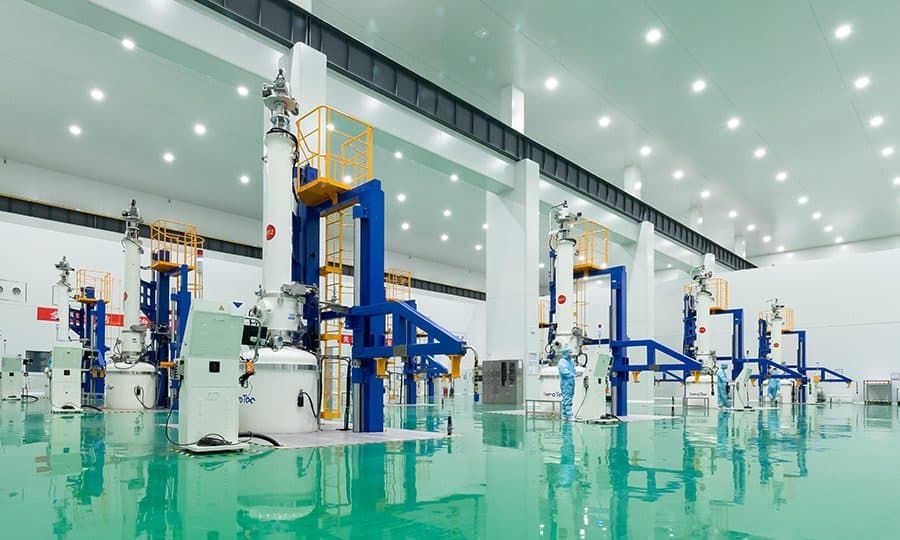
Ingot growth and wafering look like a short link between polysilicon and cells, but CSE describes slicing ingots into wafers as a more complex process than the downstream stages. Crystal-growth and precision-slicing equipment is largely imported. Small deviations in ingot growth carry through to cell performance, so process control is a constant operating demand. Feedstock is another constraint: polysilicon is still imported, and Mercom's September 2026 headline notes that domestic polysilicon production had yet to begin.
Materials matter as much as machines. Every Czochralski pull consumes a quartz crucible, and hot-zone graphite, argon and diamond wire are recurring inputs. Yield is learned through operating hours, and cell makers qualify wafers lot by lot before switching suppliers. Commissioning a plant and reaching stable, bankable output are therefore two separate milestones, often many months apart.
- Imported crystal-growth and slicing equipment lengthens lead times
- Polysilicon feedstock is still imported
- Crucibles, hot zones, argon and wire are recurring consumables
- Customer qualification takes time after commissioning
What ALMM List-III changes
A PIB release of 18 March 2026 announced ALMM List-III for ingots and wafers with effect from 1 June 2028. The initial list is to be issued only once at least three independent units with a combined 15 GW of capacity are available, and a wafer maker seeking enlistment must have equivalent ingot capacity. Grandfathering is provided for projects already in the pipeline.
The practical consequence is simple. If List-III obligations arrive faster than ingot and wafer plants reach stable operation, cell makers face a squeeze on qualifying wafers. That raises the value of capacity that is demonstrably operating, integrated from ingot to wafer, and qualified. It also means the 15 GW trigger will be measured against plants that exist, not against announcements.
- Effective date announced: 1 June 2028
- Initial list needs three or more independent units and 15 GW combined
- Wafer enlistment requires equivalent ingot capacity
- Check the latest MNRE documents for scope and grandfathering
How to judge a capacity announcement
Buyers, lenders and policy watchers can apply a short checklist before treating an announcement as future supply. The answers usually show whether a project is months or years from qualified output, and whether its upstream inputs are secured.
- Is the figure ingot, wafer or both, and is it nameplate capacity or expected output?
- Is there a commissioning date, or only a target year?
- Has the plant produced wafers that a cell maker has qualified?
- Are polysilicon, crucibles and other consumables contracted?
- Which wafer formats and doping types (for example n-type for TOPCon) will it make?
- Does the ingot capacity match the wafer capacity, as List-III requires?
How JRST supports this requirement
JRST works across the upstream silicon chain, from high-purity quartz and crucibles to crystal growth and wafering, and supports projects in moving from announced capacity to stable, qualified output. Figures on this page come from public research and trade reporting as of October 2026. Capacity numbers change quickly and should be re-checked against the original sources and current MNRE documents before reuse.
Discuss your requirement
Mohammed Saif Zaveri connects JRST's industrial content to execution conversations.
As Co-Founder and designated partner of JRST Technology LLP, Mohammed Saif Zaveri works across industrial growth, strategic partnerships, client conversations, equipment strategy, and project pathways for silicon, solar, semiconductor, and advanced-manufacturing opportunities.
This knowledge page is part of JRST's public industrial knowledge base, designed to help buyers move from search terms and early research toward a structured technical-commercial discussion.
View Mohammed Saif Zaveri's profileConnect on LinkedInFrequently asked questions
How much solar ingot and wafer capacity does India have in 2026?
About 2 GW is operating. CSE puts operational ingot–wafer capacity at 2 GW as of April 2026, and Mercom reported the same figure in September 2026.
How much ingot and wafer capacity has India announced?
CSE says recent announcements aim at about 100 GW of ingot–wafer capacity, while Mercom counts a pipeline of about 30 GW across polysilicon, ingot and wafer. The totals differ by what each source includes.
Why is announced capacity so much higher than operating capacity?
Announcements come before land, financing, imported equipment, commissioning, yield stabilisation and customer qualification. Each step can take months, and upstream plants are more complex than module or cell lines.
Where do Indian cell makers get wafers today?
Mostly from imports. CSE reports about 38 GW of solar wafers imported from China in FY2025–26.
What does ALMM List-III require?
ALMM List-III, announced for 1 June 2028, covers ingots and wafers. The first list is to be issued once at least three independent units with a combined 15 GW are available, and wafer makers must have equivalent ingot capacity.
How can JRST help?
JRST supports ingot and wafer projects on the path from announcement to operation: requirement definition, crystal-growth and wafering equipment scope, crucibles and consumables, utilities, commissioning and production readiness. Outcomes are project-specific and must be validated.
Primary sources and further reading
Last reviewed 2026-10-09. Technical scope, policy eligibility, availability, and commercial terms should be independently confirmed for each project.