
What project owners need to know.
India is targeting at least 80 GW of domestic ingot and wafer manufacturing capacity by June 2028, PV Tech reported in August 2026, against about 2 GW operating in September 2026 according to Mercom. Hitting it takes more than crystal pullers: every Czochralski ingot is grown in a quartz crucible that is consumed in use, so new ingot capacity creates matching demand for crucibles, high-purity quartz sand, polysilicon, argon and graphite hot-zone parts.
What was reported
In its 7 August 2026 report on the planned polysilicon incentive, PV Tech wrote that India is also targeting at least 80 GW of domestic ingot and wafer manufacturing capacity by June 2028. The same report covered remarks by the MNRE Secretary at a Confederation of Indian Industry event in New Delhi on the proposed polysilicon PLI.
The starting point is low. Mercom reported on 11 September 2026 that India had just 2 GW of operational ingot and wafer capacity. Much of the rest is announced or under construction, including large projects by Tata Power, Waaree Energies and Agastya Energy.
Why ALMM List-III makes the date matter
MNRE's 17 March 2026 amendment extends ALMM to ingots and wafers from 1 June 2028. The initial wafer list is to be issued once at least three independent manufacturers with combined capacity of 15 GW are enlisted, and wafer enlistment is tied to equivalent ingot capacity.
For project developers that means domestic wafers will become a compliance requirement for covered projects. For manufacturers it means the race is not only to build capacity but to have it running, qualified and enlisted in time.
- List-III effective date: 1 June 2028
- Initial list trigger: three independent units, 15 GW combined
- Wafer enlistment linked to ingot capacity
Every ingot grows in a quartz crucible
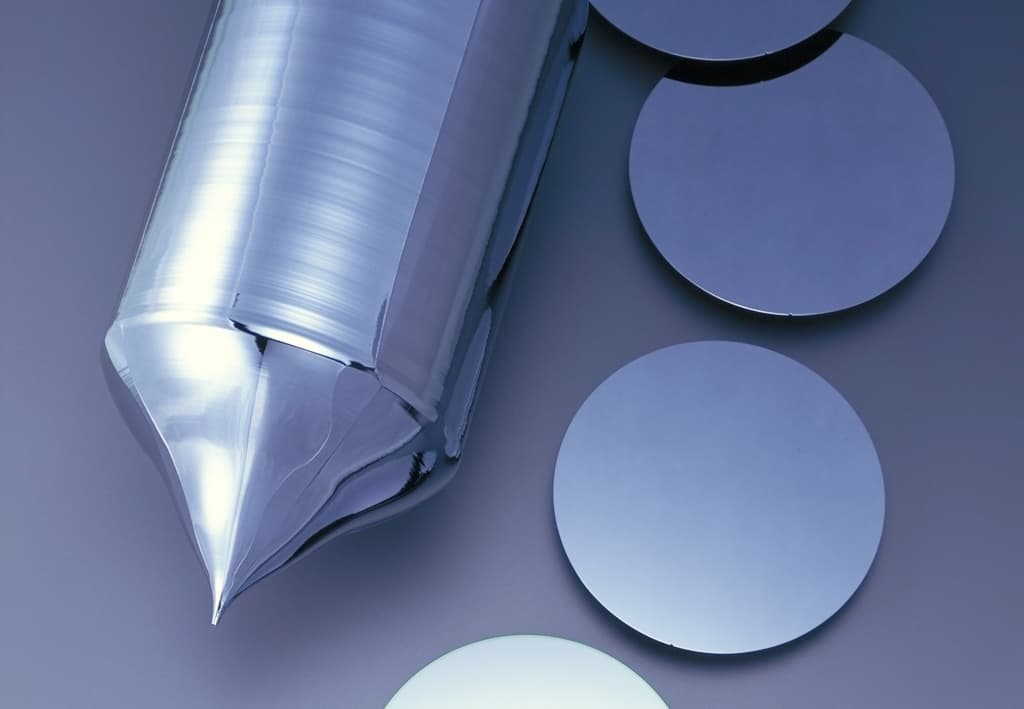
A Czochralski puller melts polysilicon in a fused-quartz crucible and draws a single crystal from the melt. The crucible softens, reacts with the melt and is replaced; it is a consumable, not a fixed asset. Crucible quality affects oxygen in the crystal, contamination and how long a crucible can run.
Fused-quartz crucibles are made from high-purity quartz sand, and USGS notes that high-purity quartz supply is concentrated in a small number of sources worldwide. A national ramp in ingot capacity is therefore also a ramp in demand for crucible-grade quartz, whether it is imported or processed domestically.
How to think about upstream demand from a GW figure
Turning a capacity target into material demand is a chain of conversions: gigawatts to wafer count through the module power class, wafer count to ingot mass through wafer size, thickness and kerf loss, ingot mass to pulls through the puller's charge size and recharge practice, and pulls to crucibles through how many runs each crucible supports.
Every link depends on the specific line: wafer format, n-type or p-type, puller design, continuous or batch recharge, and the crucible grade used. We deliberately do not publish a universal crucible-per-GW or quartz-per-GW figure, because a generic number can mislead a procurement plan by a wide margin. The useful point is directional: crucible and high-purity quartz demand scale with operating ingot capacity, not with announcements.
- GW → wafers (module power class)
- Wafers → ingot mass (format, thickness, kerf)
- Ingot mass → pulls (charge size, recharge practice)
- Pulls → crucibles (runs per crucible, crucible grade)
Polysilicon sits upstream too
Ingots are made from polysilicon, and India does not yet produce it commercially. Mercom reported a polysilicon pipeline of about 30 GW in September 2026 with production yet to begin. PV Tech reported that the proposed incentive could cover more than 10 GW of polysilicon capacity, and ETV Bharat reported a stated goal of 30 GW by 2030. The scheme had not been notified at the time of writing.
Until domestic polysilicon is running, an 80 GW ingot base would rely on imported feedstock, with price and trade-policy exposure that planners should model explicitly.
What ingot-wafer planners should line up now
The practical work is to secure the inputs that will be scarce when many plants ramp at once. That includes crucible supply with a second source, polysilicon contracts that reflect the expected policy path, argon and utilities, and graphite hot-zone consumables.
- Qualify at least two crucible suppliers
- Ask crucible suppliers where their quartz sand comes from
- Plan polysilicon sourcing against PLI and trade-policy scenarios
- Budget hot-zone and argon supply as recurring, not one-time
How JRST supports this requirement
JRST works on the quartz-to-ingot link that an 80 GW build-out depends on: high-purity quartz sand processing, crucible supply coordination and Maharashtra's first silicon-ingot line in Nagpur. We help project teams plan upstream supply alongside equipment. This guide summarises public policy and industry reporting as of the date shown. Figures are attributed to their sources and can change; confirm against the current MNRE, PIB or official notice before making a procurement or investment decision.
Discuss your requirement
Mohammed Saif Zaveri connects JRST's industrial content to execution conversations.
As Co-Founder and designated partner of JRST Technology LLP, Mohammed Saif Zaveri works across industrial growth, strategic partnerships, client conversations, equipment strategy, and project pathways for silicon, solar, semiconductor, and advanced-manufacturing opportunities.
This knowledge page is part of JRST's public industrial knowledge base, designed to help buyers move from search terms and early research toward a structured technical-commercial discussion.
View Mohammed Saif Zaveri's profileConnect on LinkedInFrequently asked questions
How much ingot-wafer capacity does India have today?
Mercom reported about 2 GW of operational ingot and wafer capacity in September 2026. Much more has been announced or is under construction.
What is India's ingot-wafer capacity target for 2028?
PV Tech reported in August 2026 that India is targeting at least 80 GW of domestic ingot and wafer capacity by June 2028.
What is ALMM List-III?
An extension of MNRE's Approved List of Models and Manufacturers to solar ingots and wafers, effective 1 June 2028. The initial list is to be issued once three independent manufacturers with a combined 15 GW are enlisted.
Why do ingots need quartz crucibles?
Czochralski ingots are pulled from molten silicon held in a fused-quartz crucible. The crucible is consumed during growth, so every ingot line needs a steady supply of crucibles made from high-purity quartz.
Is the polysilicon incentive approved?
Not at the time of writing. Reports in August 2026 described a PLI under preparation that could cover more than 10 GW; terms and outlay had not been notified.
Primary sources and further reading
Last reviewed 2026-10-16. Technical scope, policy eligibility, availability, and commercial terms should be independently confirmed for each project.