What project owners need to know.
China's draft Announcement No. 48, published on 16 October 2026, would add 12 photovoltaic technologies to its export-control catalogue, and pv magazine reports that 'advanced crystal-pulling and wafer-cutting processes' are among the items placed under export licensing. Public reporting does not name quartz crucibles. The practical risk for Indian ingot makers is indirect: crucibles are consumed in every Czochralski pull, and any friction around Chinese crystal-growth know-how and equipment makes a second, qualified crucible source more valuable. The draft is open for comment until 15 November 2026 and is not yet final.
What was published
On 16 October 2026 China's Ministry of Commerce and Ministry of Science and Technology published a draft revision of the Catalogue of Technologies Prohibited and Restricted from Export, reported as Announcement No. 48. Global Times reported 40 additions in total, 12 of them in photovoltaics, covering manufacturing techniques and core equipment for polysilicon, silicon wafers and cells. Comments are open until 15 November 2026.
Our broader explainer covers the whole draft and what it means for India's ingot and wafer plans. This guide narrows the lens to one consumable that sits inside every ingot puller: the quartz crucible.
Which items touch crystal growth
According to pv magazine's reading of the draft, the proposed prohibited items include fluidised-bed processes for trichlorosilane and silane above set line sizes, processes for wafers no thicker than 70 micrometres and several perovskite and tandem technologies. The restricted list, exportable only with a licence, includes polysilicon plant engineering for large lines, specified TOPCon, back-contact and heterojunction cell processes, and 'advanced crystal-pulling and wafer-cutting processes'.
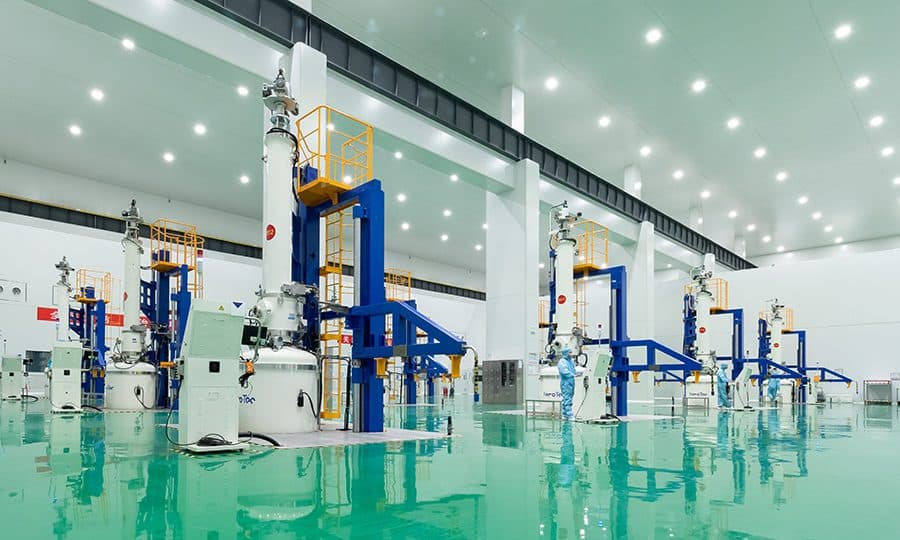
Crystal pulling is the Czochralski step where ingots are grown from molten silicon held in a quartz crucible. That is the link to crucibles, and it is an indirect one.
- Restricted: advanced crystal-pulling and wafer-cutting processes (pv magazine)
- Prohibited: processes for wafers 70 micrometres thick or less
- Coverage extends to a small number of key equipment items that carry the listed processes, according to reporting on the ministry's statement
What the public reporting does not say
None of the coverage we reviewed, from Xinhua, Global Times and pv magazine, names quartz crucibles, high-purity quartz sand or diamond wire as controlled items. Some commentary has linked the draft to crucible and wire-saw supply; we could not confirm that from the reporting on the draft, and the annex text is the authority on scope.
We would treat any claim that crucibles themselves are being restricted as unverified until it appears in the published catalogue entries.
Why crucibles still matter in this story
A Czochralski crucible is consumed in use, so every operating puller needs a steady flow of them. Crucible quality is set largely by the inner layer, which is made from high-purity quartz sand; the US Geological Survey defines high-purity quartz as below 100 ppm total impurities, and India's 2026 mineral rules set a stricter 50 ppm threshold.
When the know-how and equipment around crystal growth become a policy question, buyers tend to look harder at every input that comes from the same supply base. For an Indian ingot line, the crucible is the consumable it buys most often, and qualifying a new one takes trial runs on the puller.
What domestic HPQ sand changes, and what it does not
Domestic high-purity quartz sand can shorten one link of the chain, but sand is not a crucible. Fusion, inner-layer engineering and quality control are separate manufacturing steps, and a crucible has to be qualified on the buyer's own puller and recipe. A local sand source helps most when it is paired with a crucible maker that has qualified that sand.
What Indian ingot buyers should ask now
The draft is not final, and its effect on any one supplier is not yet known. These questions help a buyer measure exposure without waiting for the final text.
- Where is the crucible made, and where does its inner-layer sand come from?
- Is a second crucible source qualified on our puller, or only quoted?
- Does our crystal-growth equipment or process licence depend on know-how that could fall under the restricted crystal-pulling item?
- How much crucible stock do we hold against our pull schedule?
- Which hot-zone parts and spares come from the same supplier base?
How JRST supports this requirement
JRST's story starts with quartz: its team delivered Pondicherry's first high-purity quartz-sand plant on a turnkey basis, and it led the setup of the Silicon Ingot Technology line in Nagpur, Maharashtra's first silicon-ingot unit. We help ingot projects map crucible and consumable exposure and plan qualification of alternative sources. This guide summarises public reporting on a draft as of the date shown; the final catalogue text should be checked before any sourcing decision.
Discuss your requirement
Mohammed Saif Zaveri connects JRST's industrial content to execution conversations.
As Co-Founder and designated partner of JRST Technology LLP, Mohammed Saif Zaveri works across industrial growth, strategic partnerships, client conversations, equipment strategy, and project pathways for silicon, solar, semiconductor, and advanced-manufacturing opportunities.
This knowledge page is part of JRST's public industrial knowledge base, designed to help buyers move from search terms and early research toward a structured technical-commercial discussion.
View Mohammed Saif Zaveri's profileConnect on LinkedInFrequently asked questions
Does China's draft export-control list restrict quartz crucibles?
Not according to the public reporting we reviewed. Xinhua, Global Times and pv magazine describe PV process technologies and key equipment, including advanced crystal-pulling processes, but do not name quartz crucibles. Check the final catalogue text before assuming either way.
What is Announcement No. 48?
It is the draft revision to China's Catalogue of Technologies Prohibited and Restricted from Export, published on 16 October 2026 by the Ministry of Commerce and the Ministry of Science and Technology. It adds 40 technologies, 12 of them in photovoltaics, and is open for comment until 15 November 2026.
Why does crystal pulling matter for crucibles?
Czochralski crystal pulling grows silicon ingots from a melt held in a quartz crucible, which is consumed in use. Restrictions on crystal-pulling know-how do not cover crucibles directly, but they raise the value of having qualified, diversified sources for every crystal-growth input.
Can India make quartz crucibles domestically?
Crucible making depends on high-purity quartz sand, fusion equipment and qualification on ingot pullers. India is building upstream quartz capacity, but each crucible source still needs qualifying on the buyer's own puller before it can carry production.
Primary sources and further reading
Last reviewed 2026-10-25. Technical scope, policy eligibility, availability, and commercial terms should be independently confirmed for each project.