
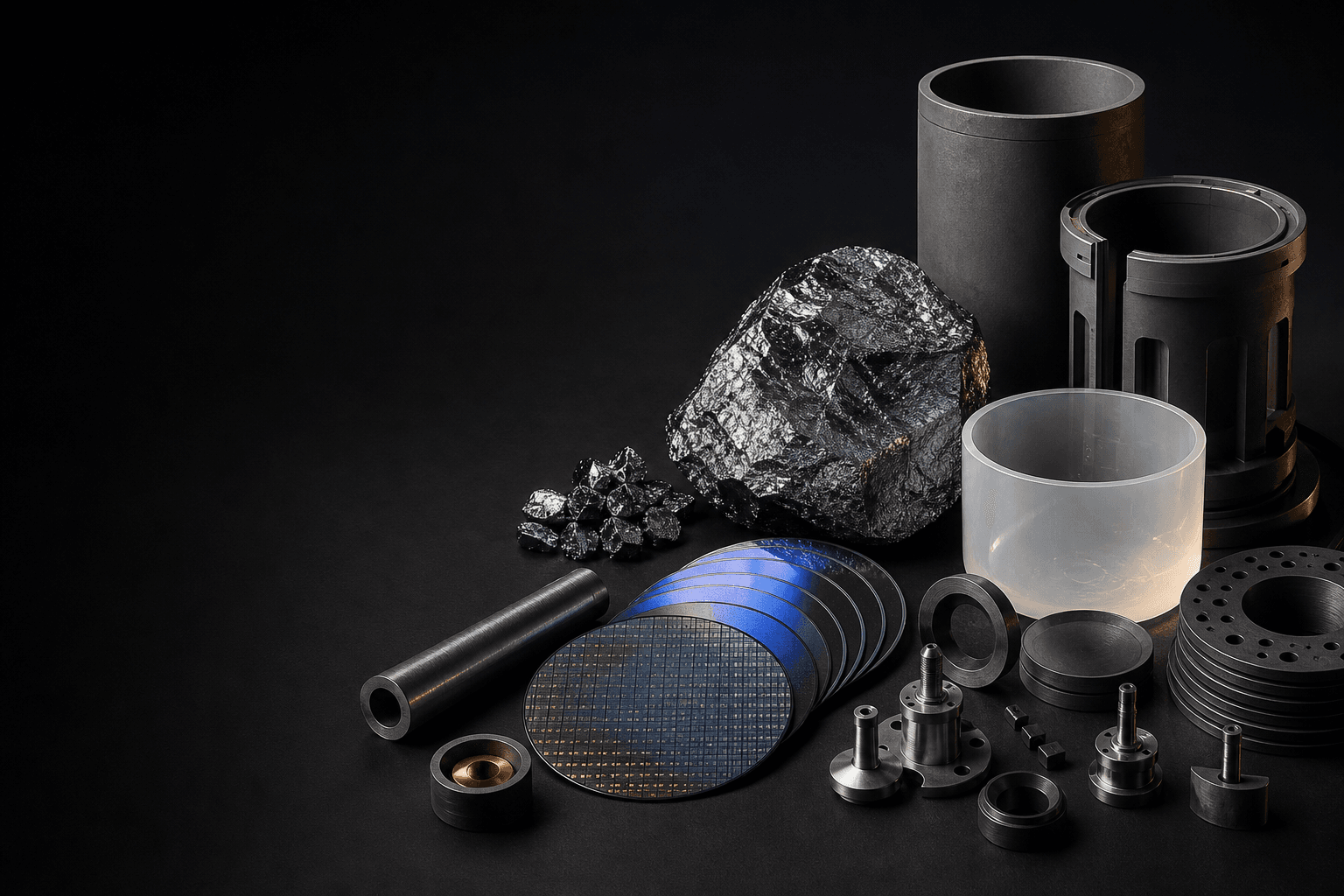
High-purity quartz sand plants, from the deposit to 5N sand.
Our team delivered a high-purity quartz-sand plant in Pondicherry on a turnkey basis. We take HPQ and UHPQS projects from deposit testing and flowsheet design to a commissioned plant, with the machines, chemicals and spares it needs.
Configured around the project, not a fixed package.
Every mandate begins with technical and commercial requirements. Individual machinery supply is available independently of a full turnkey engagement.
- 01Deposit screening and laboratory testing to set the achievable grade
- 02Process flowsheet: crushing, screening, flotation, magnetic separation
- 03Acid leaching, hot chlorination and calcination design
- 04Machine sourcing, clean-room packing and effluent treatment
- 05Installation, commissioning and training
- 06Qualification with crucible and fused-quartz customers
- 07Recurring supply of chemicals, liners and spares
Equipment condition, inspection method, warranty, after-sales support, delivery schedule, and acceptance criteria are confirmed in the final supplier and JRST proposal. Manufacturer-backed warranty terms are passed through according to the selected equipment package.
HPQ Sand Plant Setup: FAQs
What are the main stages of a high-purity quartz sand plant?
A typical HPQ flowsheet runs from selective mining and sorting, through crushing (often after thermal shock), screening, attrition scrubbing and flotation, to magnetic separation, acid leaching, hot chlorination where the grade needs it, calcination, and clean-room packing. The exact route depends on where the impurities sit in the deposit, so it is set after laboratory testing, not copied from another plant.
Can any quartz deposit be processed into HPQ or UHPQS sand?
No. Processing removes surface and accessible impurities, but aluminium, titanium and lithium locked inside the quartz lattice stay. A deposit has to be sampled and tested element by element, and ideally run through a trial processing route, before anyone can say whether it can reach crucible or semiconductor grade.
Why is acid leaching and chlorination needed in a quartz sand plant?
Physical steps such as flotation and magnetic separation remove separate mineral grains. Acid leaching dissolves impurities on grain surfaces and in opened cracks, and hot chlorination pulls out alkali and metal impurities as volatile chlorides. These chemical steps are usually what move sand from industrial grade towards the purity crucible makers ask for, and they need careful fume and effluent treatment.
Who buys high-purity quartz sand from an Indian plant?
The main buyers are quartz crucible makers for silicon ingot growth, fused quartz tube and quartzware makers for cell and semiconductor furnaces, and makers of optical and specialty glass. Each qualifies sand through its own fusion trials, so consistent lot-to-lot chemistry matters as much as the headline purity.
Can JRST set up an HPQ sand plant and supply spares afterwards?
Yes. JRST Technology, led by Co-Founder & Director Mohammed Saif Zaveri, tests the deposit, designs the flowsheet, sources machines, and supports commissioning, training and customer qualification. Sand samples, process chemicals and plant spares can be requested on the JRST Buyer Portal. Scope and timelines are confirmed in each proposal.
Begin with the requirement, not a catalogue.